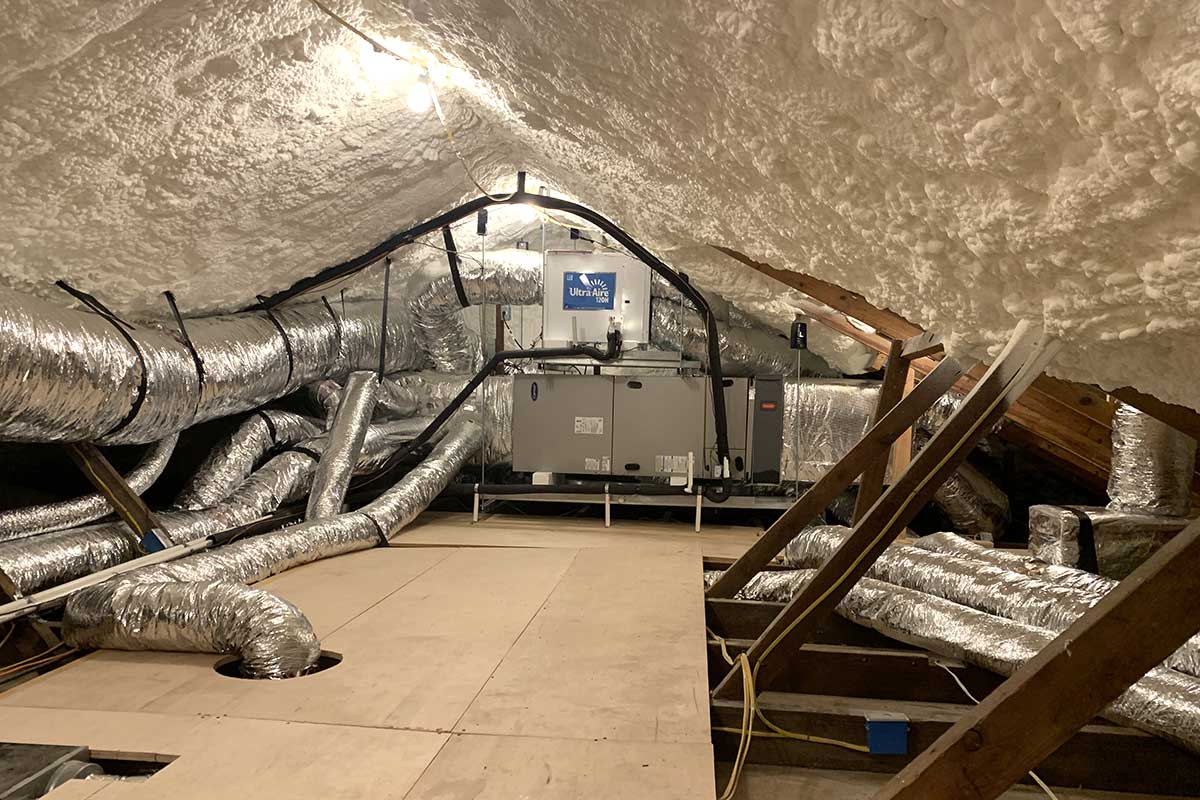
Why Sealing and Insulating at the Roofline Outperforms “Top-Ups” in Central Texas
Austin summers are hot and humid, and many homes have HVAC and ducts sitting in 120–140°F attics. If your goals are comfort, lower bills, and better air quality, the most effective “attic insulation Austin” strategy is to seal the attic and insulate at the roofline, bringing the attic inside the building envelope. This turns a hostile space into a calm, semi-conditioned zone where ducts work efficiently and humidity is easier to control.
What Is a Closed (Unvented) Attic Retrofit
A closed or unvented attic moves the thermal and air barrier from the attic floor to the underside of the roof deck. We air-seal the roofline and apply spray foam so the attic becomes part of the home’s conditioned volume. With the attic now near indoor temperature, duct leakage stops wasting energy and often feels like useful cooling rather than loss. The method is permitted by residential building codes when designed and done correctly for moisture and insulation.
Why This Approach Works in Austin’s Hot-Humid Climate
Austin sits in a long, cooling season with persistent humidity. In this climate, locating ducts in hot, vented attics adds load and creates comfort complaints. Bringing ducts inside the envelope reduces those losses, stabilizes indoor temperatures, and improves indoor air quality, especially during peak heat and shoulder seasons.
How We Build It: Materials and Moisture Control
- Detailed Air-Sealing at the Roofline: We create a continuous air barrier at the roof deck and around penetrations.
- Spray Foam at the Roof Deck: Open-cell or closed-cell foam is specified based on your roof assembly, budget, acoustics, and the humidity strategy.
- Right-Sized Ventilation and Dehumidification: Because the attic is no longer vented to the outdoors, we design whole-home ventilation and dehumidification so the attic and living areas stay dry and healthy year-round.
- Code-Aligned Assembly: We document the details that matter for durability and for unvented-attic compliance.
Roofing and Shingle Temperatures
A common question is whether an unvented attic overheats shingles. Field testing shows only small increases in shingle temperature on insulated, unvented roofs, well within roofing limits when assemblies are detailed correctly. The comfort and efficiency gains from bringing ducts inside overwhelmingly outweigh this concern for most homes.
What If You Stick with a Vented Attic
If a full roofline conversion isn’t in scope for your home, you can still upgrade a vented attic the right way: air-seal at the ceiling plane, install baffles for continuous soffit-to-ridge airflow, and top up insulation to code-aligned levels for our climate. This phased path improves comfort now and sets you up for a future roofline conversion when it fits the budget.
Where Radiant Barriers Fit
Radiant barriers can reduce attic heat gain, and in hot regions with ducts in the attic, they can translate to meaningful cooling-energy savings when installed correctly. We treat radiant barriers as an optional add-on, a complement to air-sealing and insulation, not a replacement.
The Texas Retrofits Process
Assessment and Design
We begin with a performance review of comfort complaints, humidity, duct layout, insulation, and leakage to ensure the plan fits your home and budget.
Seal and Insulate the Roofline
We build a continuous air/thermal boundary at the roof deck with spray foam, bringing the attic inside the envelope and protecting ducts from extreme heat.
Humidity and Fresh Air
We integrate balanced ventilation and dehumidification, so your indoor air stays healthy and comfortable across seasons.
Quality Checks
We verify the critical for an unvented-attic assembly in our climate zone.
What You’ll Notice After the Upgrade
- More Even Temperatures: Rooms that ran hot in the afternoon feel consistent all day.
- Quieter, More Efficient HVAC: With ducts in a temperate space, systems run shorter cycles and deliver air at the temperature you paid to condition.
- Cleaner, Drier Air: A sealed attic plus the right IAQ plan helps control humidity and particles that affect comfort and health.
A Smart Path Forward
For most Austin homes with ducts in the attic, a closed, unvented retrofit is the highest-performing upgrade for comfort, IAQ, and energy savings. If timing or budget points to a phased approach, start with air-sealing, baffles, and an insulation top-up, then revisit a full roofline conversion later. Either way, we design around your goals and the realities of Central Texas heat and humidity.
Ready to bring your attic inside the envelope and feel the difference this summer?
Contact Texas Retrofits to schedule a home energy consultation and custom attic plan.
Frequently Asked Questions About Closed (Unvented) Attic Retrofits
Do Closed Attics Meet Code in Austin?
Yes – unvented attics are permitted when assemblies meet code requirements for air-impermeable insulation at the roof deck and moisture control. We design and document to those provisions.
Will My Shingles Overheat?
Testing shows only small shingle temperature increases on insulated, unvented roofs. Proper detailing and a sound ventilation/dehumidification strategy protect the assembly.
Open-Cell or Closed-Cell Foam?
Both can work. We specify based on roof assembly, budget, acoustics, and the moisture strategy for your home.